The same tour or the same time?
“Our tours are always the same.” We hear this in almost every dispatch office. It rarely refers to the tour itself. It refers to the customers: they rely on their delivery arriving at the usual time, every day.
Lunch for older people, medicines for the pharmacy, baked goods for the branch, spare parts for the workshop: anyone who receives a delivery every day plans the day around it. The delivery time becomes a habit.
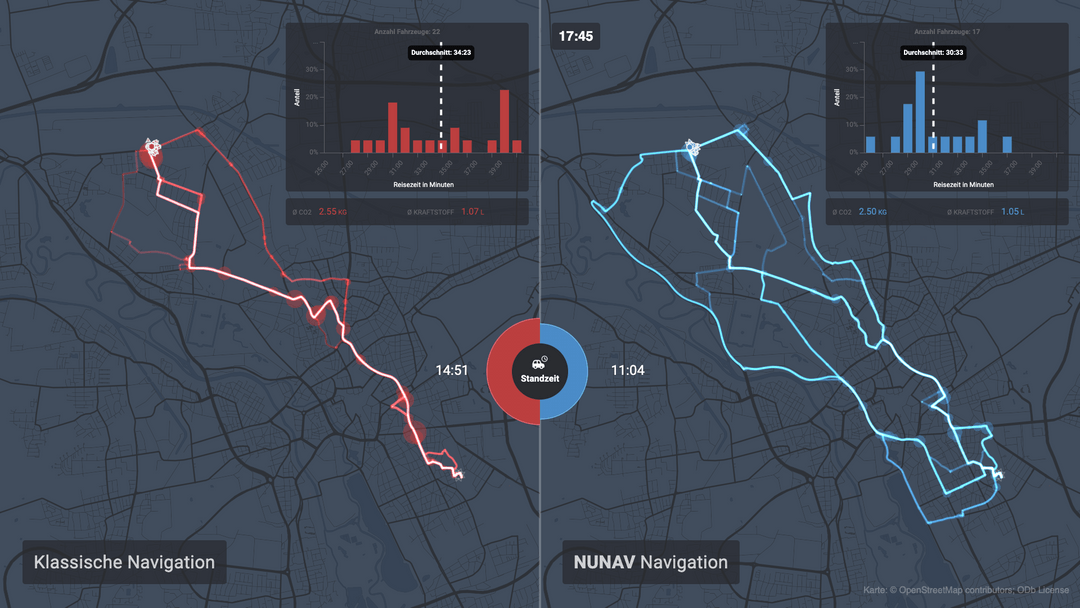
For a long time, the obvious answer was a fixed tour. Same vehicle, same order of stops, every day. As long as nothing changes, that works. But something changes every day: an order is canceled, a new one is added, a road is closed.
That is when it becomes clear what a fixed tour actually holds on to. At first, only the order of stops. The time of day follows it. If a stop drops out, all following stops arrive earlier. If one is added, all following stops arrive later.
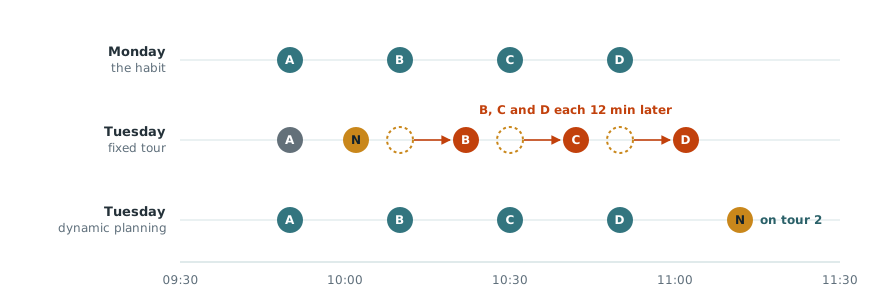
Put simply: a fixed tour preserves the order. It preserves the habit only as long as nothing happens.
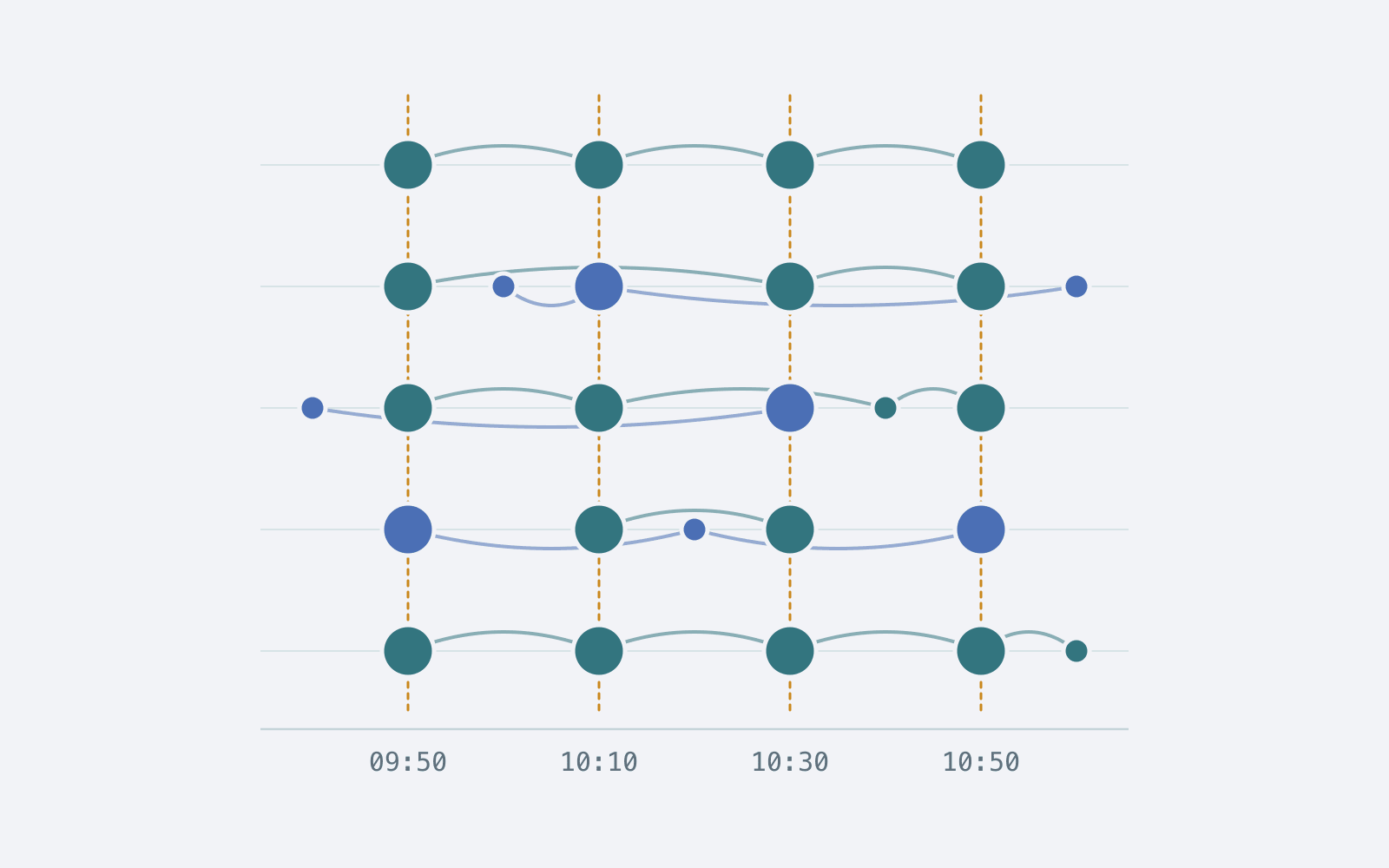
In dynamic tour planning, we therefore separate the two. The tour may be put together anew every day. The usual delivery time of each individual stop remains.
Stable delivery times come from flexible tours.
The knowledge sits in the process
How do you know when a delivery is expected? It is rarely written down. The knowledge sits in the process itself. It has been baked in over the years: in the order of the stop list, in the experience of regular drivers, in arrangements made by phone, on a note in the driver's cab.
It is like instant soup. Anyone can heat it up. How the soup got into the packet, nobody knows after a few years. Nor how soup is made in the first place. And whether instant soup still tastes like soup at all has been forgotten as well.
For tour planning, this means: the tours can be driven. Why they are cut the way they are, which times really matter to customers, and whether the old order still serves them today is no longer known.
- Ingredients
- a stop order that just grew, the experience of regular drivers, verbal arrangements, a note in the cab, exceptions from years gone by, traces of “we've always done it this way”
- Preparation
- heat, drive off
- Origin
- unknown
- Best before
- the first regular drivers retire
Anyone switching from fixed tours to dynamic planning therefore has to make this knowledge visible again first. Otherwise the new system plans cleanly, but past the habits.
Working the process backwards
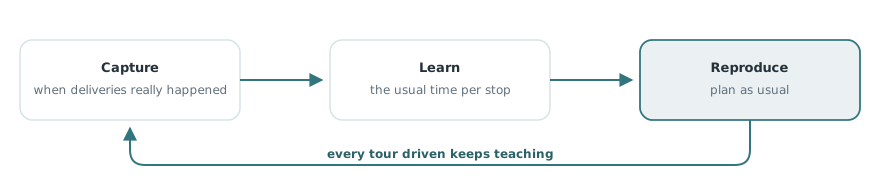
This knowledge can only partly be obtained by asking. So we read it from the process itself: NUNAV works backwards through the process the habits came from.
- Capture: Every delivery leaves a trace. What is recorded is when a stop was actually served. Day after day.
- Learn: From these traces, each stop gets a usual delivery time. A single day with a traffic jam or a detour does not yet change it.
- Reproduce: Tour planning keeps this time within a defined margin. The order of stops, the vehicle and the tour layout may change for it.
The distinction matters. What is measured are delivery times. The usual delivery time is derived from them. And how much it counts in planning is a decision.
Where it gets difficult
Learned delivery times make visible what used to be hidden in the process. That is intended. But it raises questions nobody had to ask before.
How stable is the habit really?
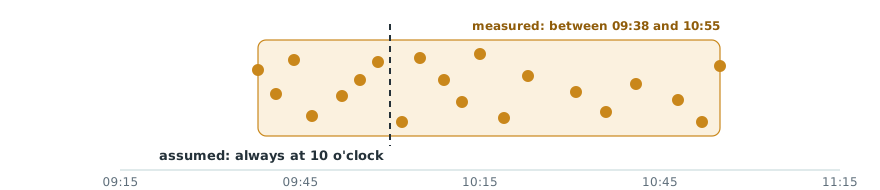
“They always get their delivery at ten.” The measurement often shows something else: sometimes half past nine, sometimes just before eleven. That is not a measurement error. It is how the fixed tour actually worked. It kept the order of stops, and the time of day varied with the day. Before a habit can be kept, it therefore has to be clear which one is meant.
Waiting as part of the plan
If a tour runs faster than usual, the vehicle reaches the next stop too early. There are then two options: deliver early or wait. Delivering early breaks the habit. Waiting costs working time. What decides is where the waiting happens: just before the stop, at the depot through a later start, or not at all, because an earlier delivery is welcome. Waiting strategies thus become a planning question.
Breaks in the timeline
Once delivery times are fixed, the break becomes part of the schedule too. A break in the wrong place pushes back every following delivery. Driving and rest time rules still apply. Planning has to bring both together: the break where it costs no habit, and waiting time where it arises anyway.

Every habit kept has a cost
Keeping every habit to the minute means more miles and more working time. How much punctuality should count against distance and working time is not a technical question. It is a decision. It can, however, be calculated beforehand.
Habits change
When a delivery area changes or someone moves, the old habit no longer fits. It then has to be relearned on purpose. Otherwise planning holds on to a time that no longer serves anyone.
The decisive question
For learned delivery times, it is therefore less decisive whether a tour looks the same every day. The more important question is: does the delivery arrive when it is expected?
How we support you
Learned delivery times cannot simply be switched on. We accompany the introduction in three steps:
- Taking stock: How stable are delivery times today, really? We analyze the tours that were driven.
- Set-up: Together we decide for which stops the habit counts and how much leeway it gets.
- Operation: Waiting times, breaks and outliers stay in view. When habits change, we adjust.