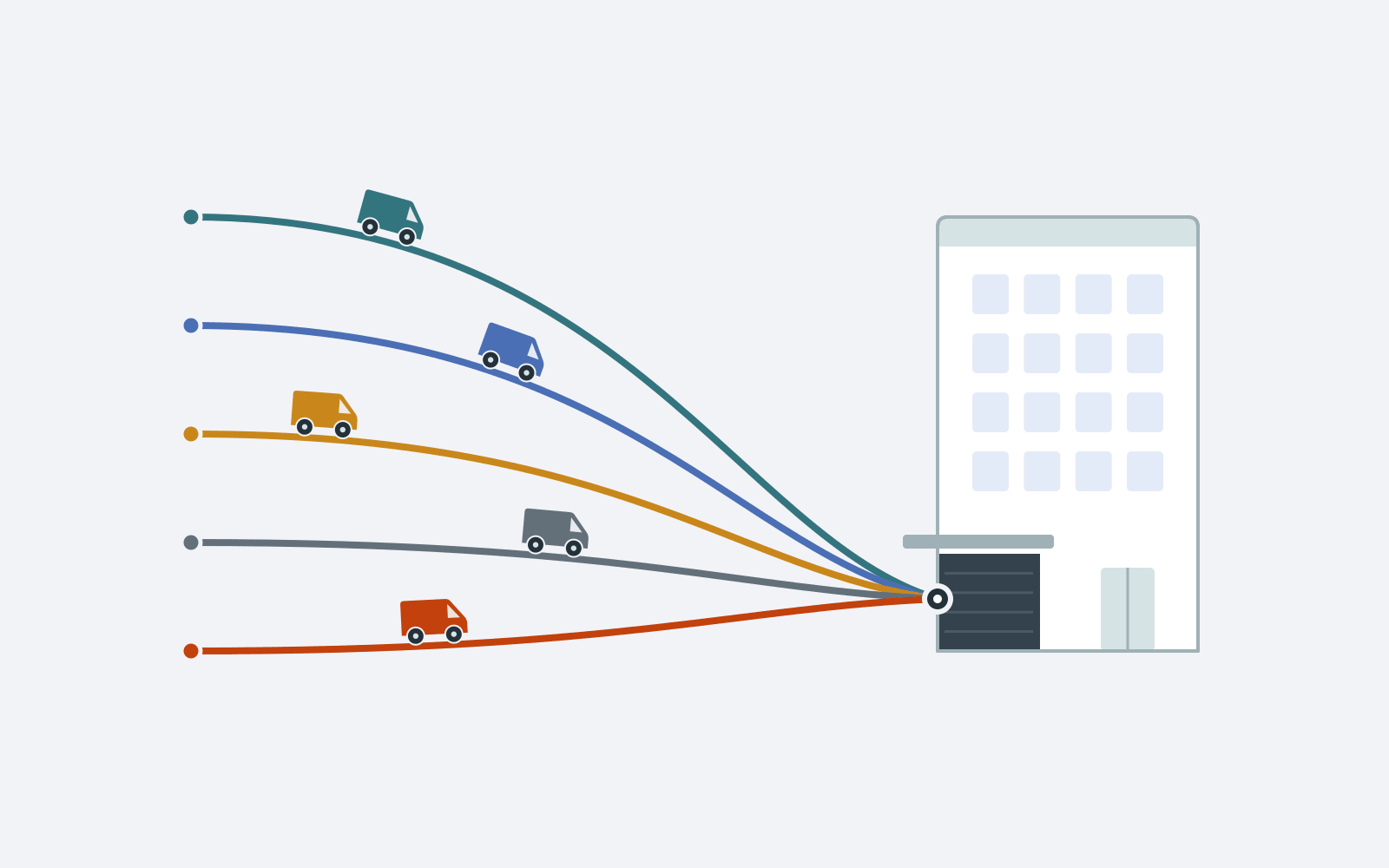
Anyone who bundles transports saves kilometres, vehicles and working time. That holds, however, only as long as the bundling is allowed.
An optimiser looks for the cheapest assignment of orders to vehicles. Without rules it also finds assignments that are efficient on paper and not permitted in practice: pharmaceuticals for the 2 to 8 °C range in an unrefrigerated van, dangerous goods with a driver who lacks the training, meals that reach the ward an hour after serving time.
Such errors do not show in planning, only later at the loading dock.
An optimiser is only as good as the rules it knows.
Where the rules come from
The rules of tour planning have different origins. Some are set by law or by standards, for example by dangerous-goods law or Good Distribution Practice for pharmaceuticals. Some come from contracts and hygiene concepts. And some are experience: this vehicle does not fit through that gate, that receiving desk is not staffed at noon.
For planning, the origin does not matter at first. What matters is that the rule is in the system and not only in the dispatcher's head. A rule that only one person knows holds only as long as that person plans.
Requirements and properties
NUNAV maps such rules as requirements and properties. An order asks for refrigeration, hygiene training or dangerous-goods equipment, for example. Vehicles, drivers and transport partners offer properties. Only what fits together is planned.
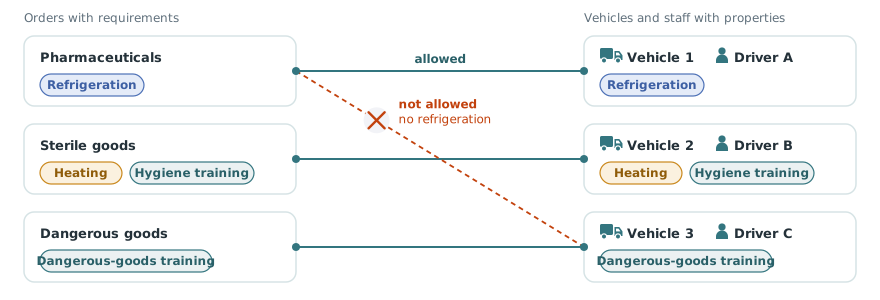
The check runs both ways. A vehicle can have requirements too, for instance on the qualification of the person driving it. Beyond the mere presence of a property, values can be compared, such as a minimum size or a maximum weight. It can also be stated what must explicitly not be present.
The optimiser then looks for the best assignment only among the allowed ones. If an order remains unplanned, NUNAV shows why it could not be scheduled.
Capacity has more than one dimension
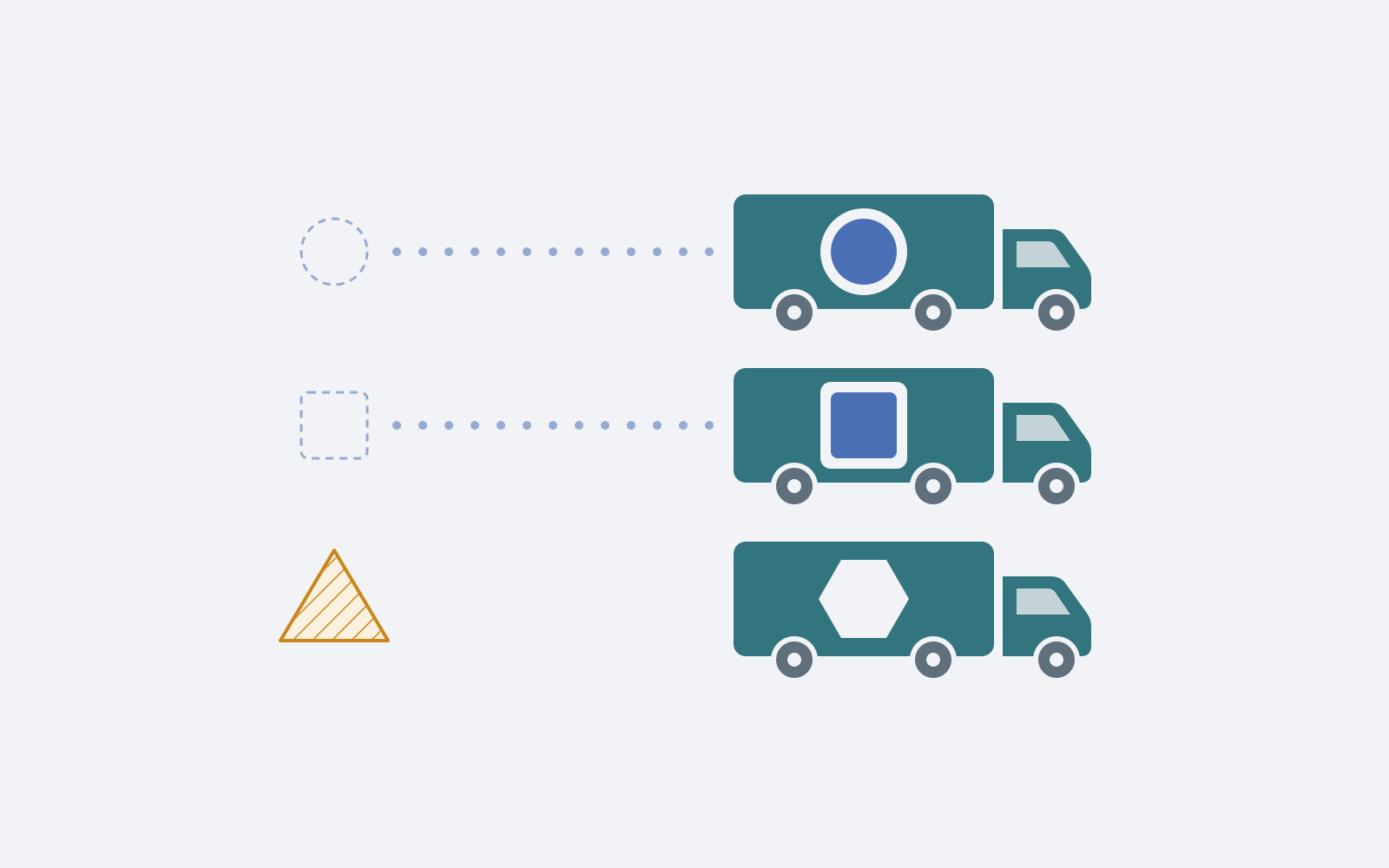
Whether a load fits is rarely a question of weight alone. Roll containers, transport trolleys and sterile goods containers take up slots, boxes take up volume, and sometimes an operation needs a measure of its own that only counts for it.
NUNAV therefore plans with several capacities at once: weight, volume, count and further, freely defined dimensions. Each can have a limit for the normal case and an outer limit. Vehicles can also be divided into compartments that each take only one kind of load. Trailers are planned as a capacity of their own as well.
Time is a rule too
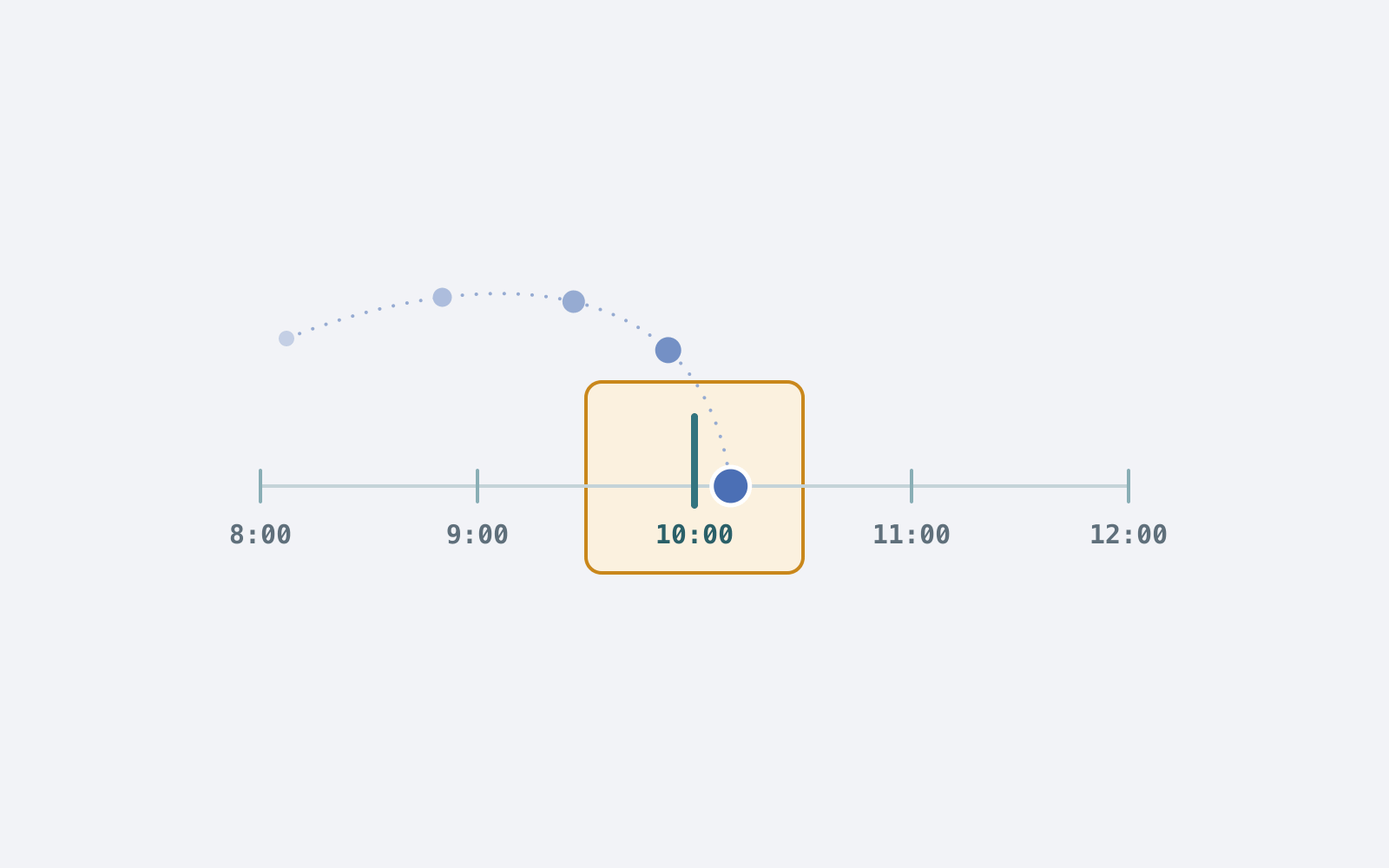
Time windows belong to the rule set as well. Meal service has a fixed time, goods receiving fixed opening hours, and some locations may not be supplied at all at certain times. NUNAV takes into account delivery windows on the order as well as opening and blocked times at the location.
Pickups, deliveries and service orders are part of the same plan. That way, cycles in which the same vehicle brings and takes away can be planned together too, like sterile goods in hospital logistics.
Checking before the tour leaves
Even a good rule set does not cover every case. Sometimes an order is moved by hand, sometimes a piece of information is missing, sometimes the optimiser produces a tour that is permissible by the numbers and still unusual.
NUNAV therefore checks tours before release. Each depot decides which checks it applies. Checks can cover, for example, whether all requirements are met, how heavily the vehicles are loaded, whether orders remained unplanned, whether a location is visited twice, whether a stop lies far away from the others, whether conspicuous time jumps occur between stops that lie close together, and how much waiting time a tour contains.
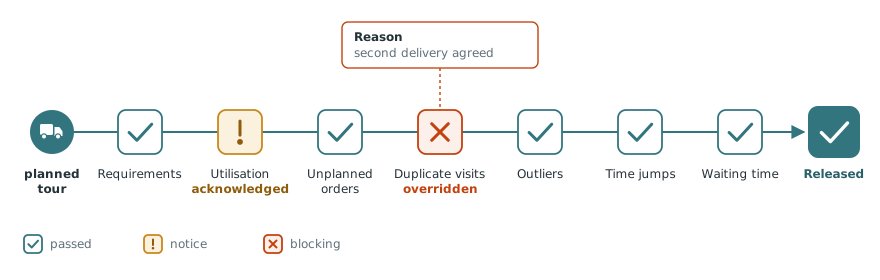
A finding can be a notice or block the release. A blocking check can only be overridden with a reason, and only by people with the right role. Every release attempt is recorded with its findings. That keeps it visible later where someone deliberately departed from the rule.
The decisive question
For bundling, it therefore matters less how many orders fit on one vehicle. The more important question is: is the rule set in the system, or only in people's heads?
How we support you
A rule set does not come about at a desk but out of operations. We work it out together in three steps:
- Taking stock: Which rules apply today, and where are they written down? We collect them from contracts, hygiene concepts, timetables and conversations with dispatch.
- Mapping: Together we translate them into requirements, properties, capacities and time windows, and decide which checks run before release.
- Operation: Findings and overridden checks stay visible. Where a rule turns out to be too strict or too loose, we adjust it.